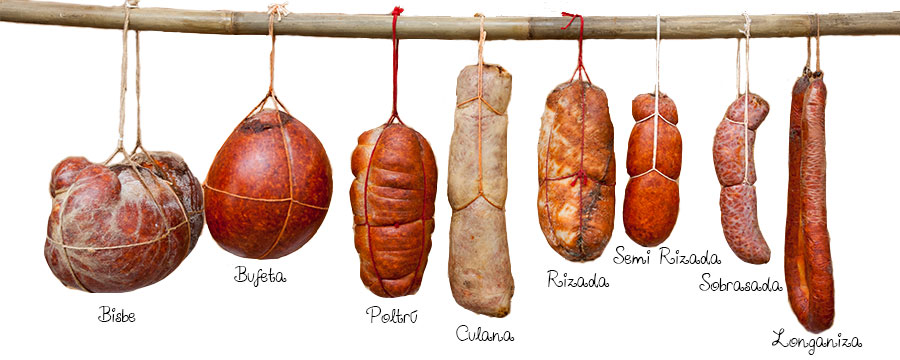
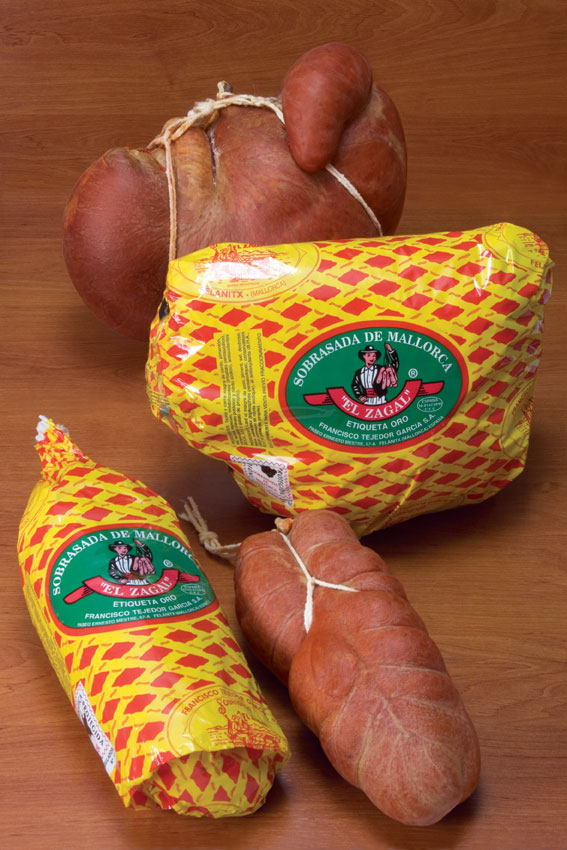
Depending on the casing into which it is stuffed, sobrasada comes in different formats. The size of the casing determines the curing time and, ultimately, the organoleptic characteristics of the final product.
Longaniza
Stuffed into the small intestine. Due to its quick curing process, it is consumed shortly after production. It is the thinnest and smallest variety, ideal for immediate consumption.
Semi-rizada
A medium-sized format, stuffed into thin sections of the large intestine. Its curing is somewhat longer than the longaniza, giving it a more developed flavour.
Rizada
Larger than the semi-rizada, being stuffed into thick sections of the large intestine. It is one of the most popular and versatile formats, with a perfect balance between curing and freshness.
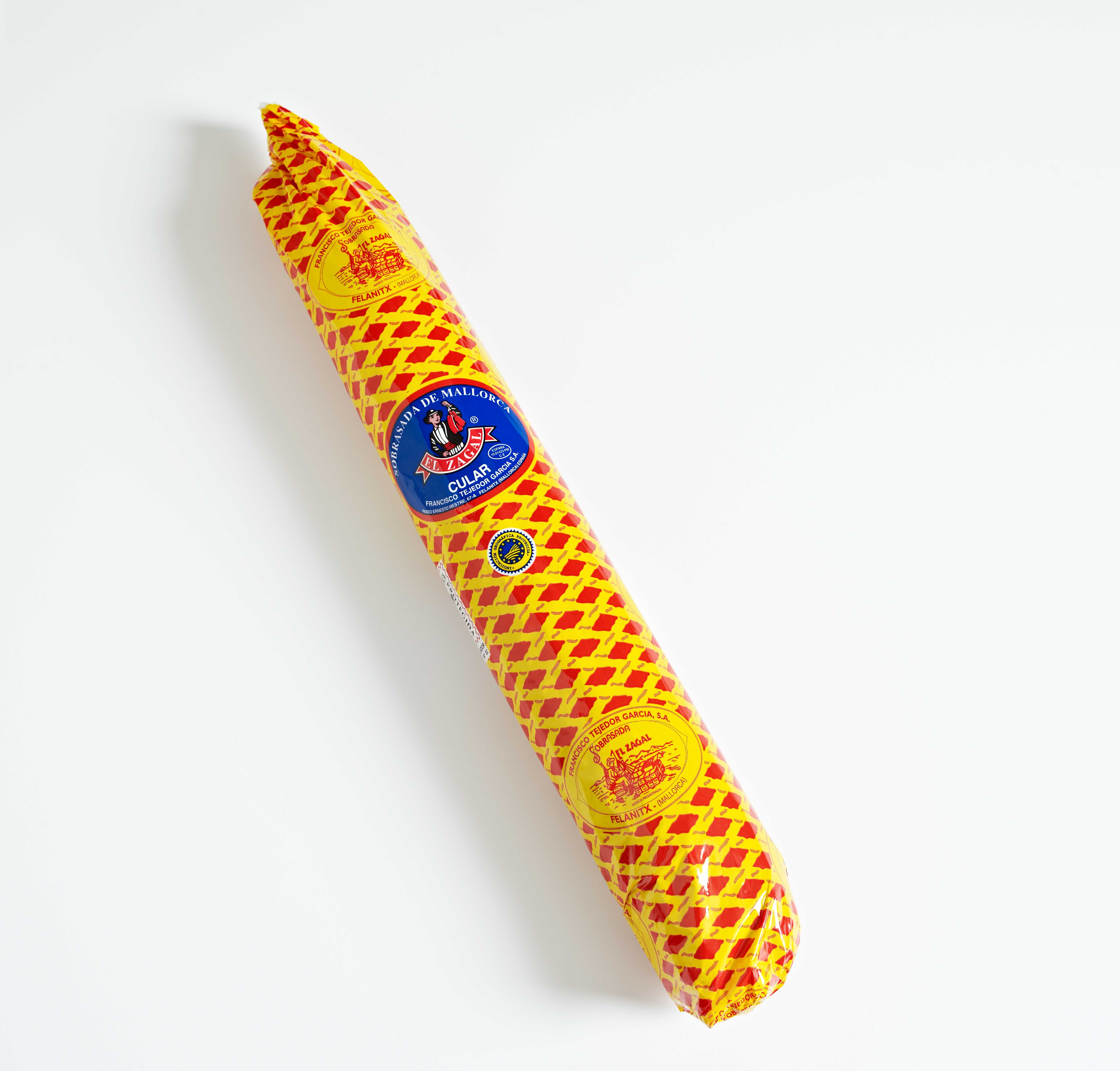
Cular
Has a curved shape as it is stuffed into the last end of the large intestine. Its larger calibre allows for slower and deeper curing, developing more complex and intense flavours.
Poltrú
Stuffed into the caecum, the first end of the large intestine. Its rounded shape and considerable size make it highly prized by connoisseurs.
Bufeta
Stuffed into the urinary bladder. Its irregular shape and large capacity allow for very slow curing that produces a sobrasada of extraordinarily intense flavour.
Bisbe
Stuffed into the stomach. It is the largest of all and therefore requires layered curing that can extend over many months. The "bisbe" (bishop in Mallorcan) is the most coveted piece from the traditional pig slaughter (matanzas).
Formats and presentations
Other formats
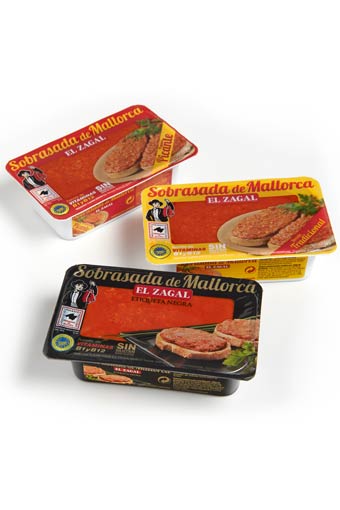
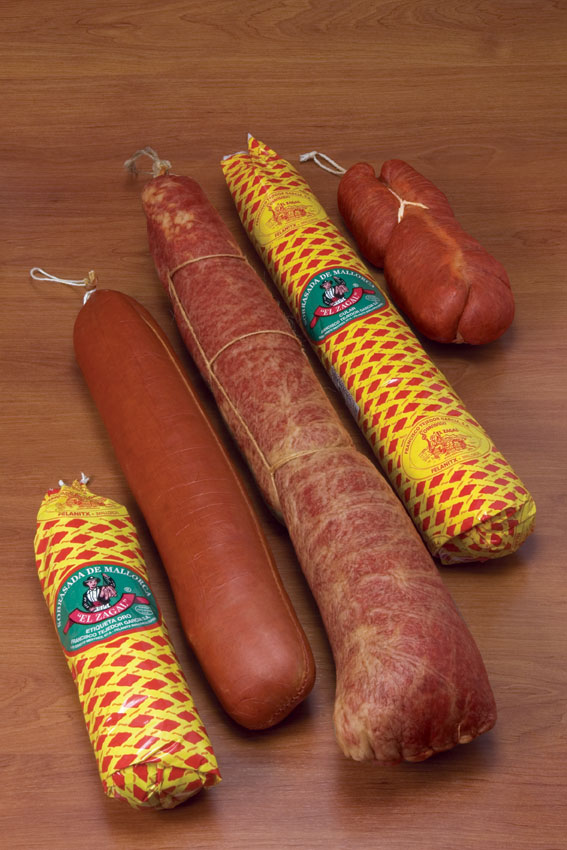
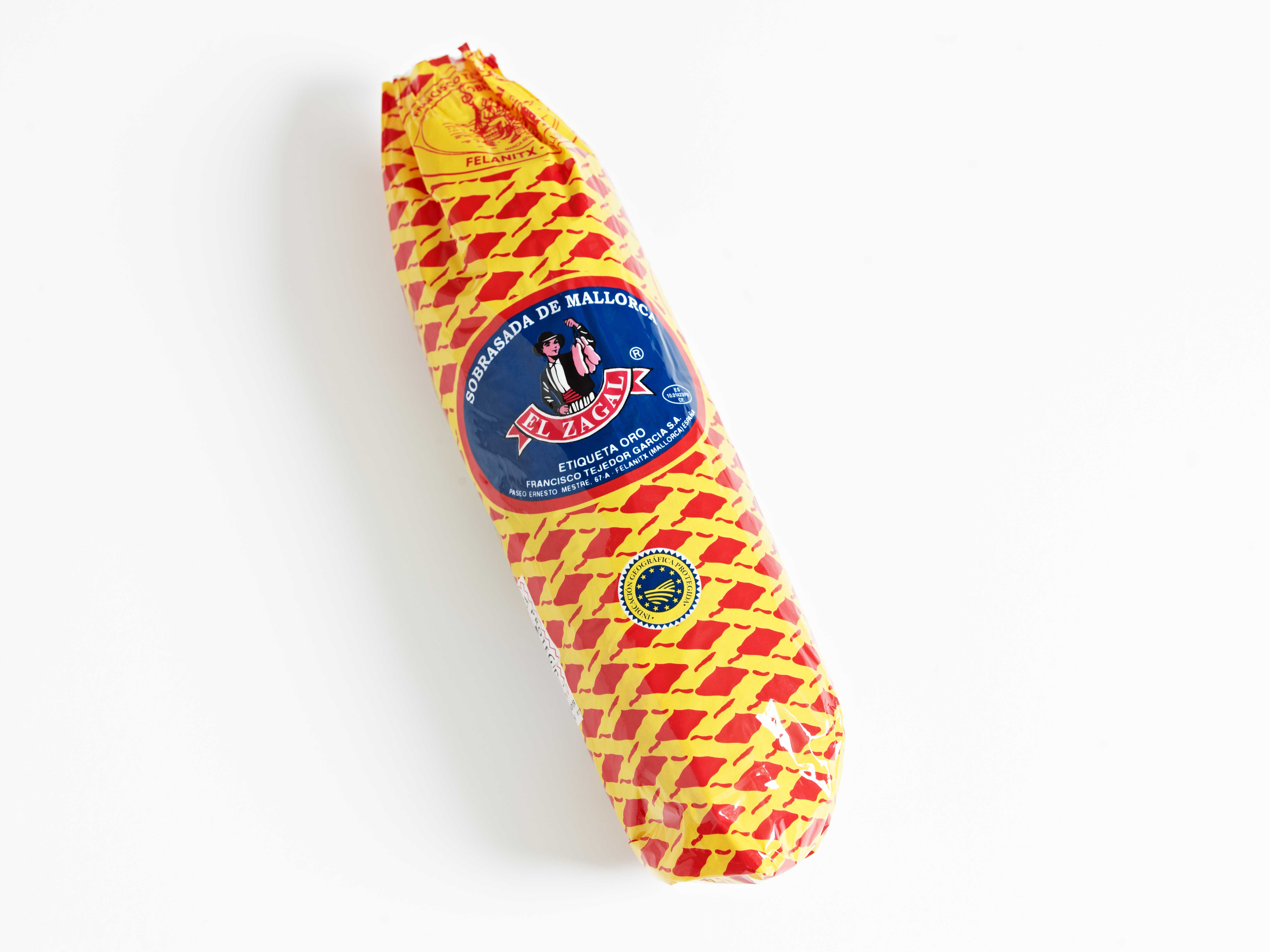
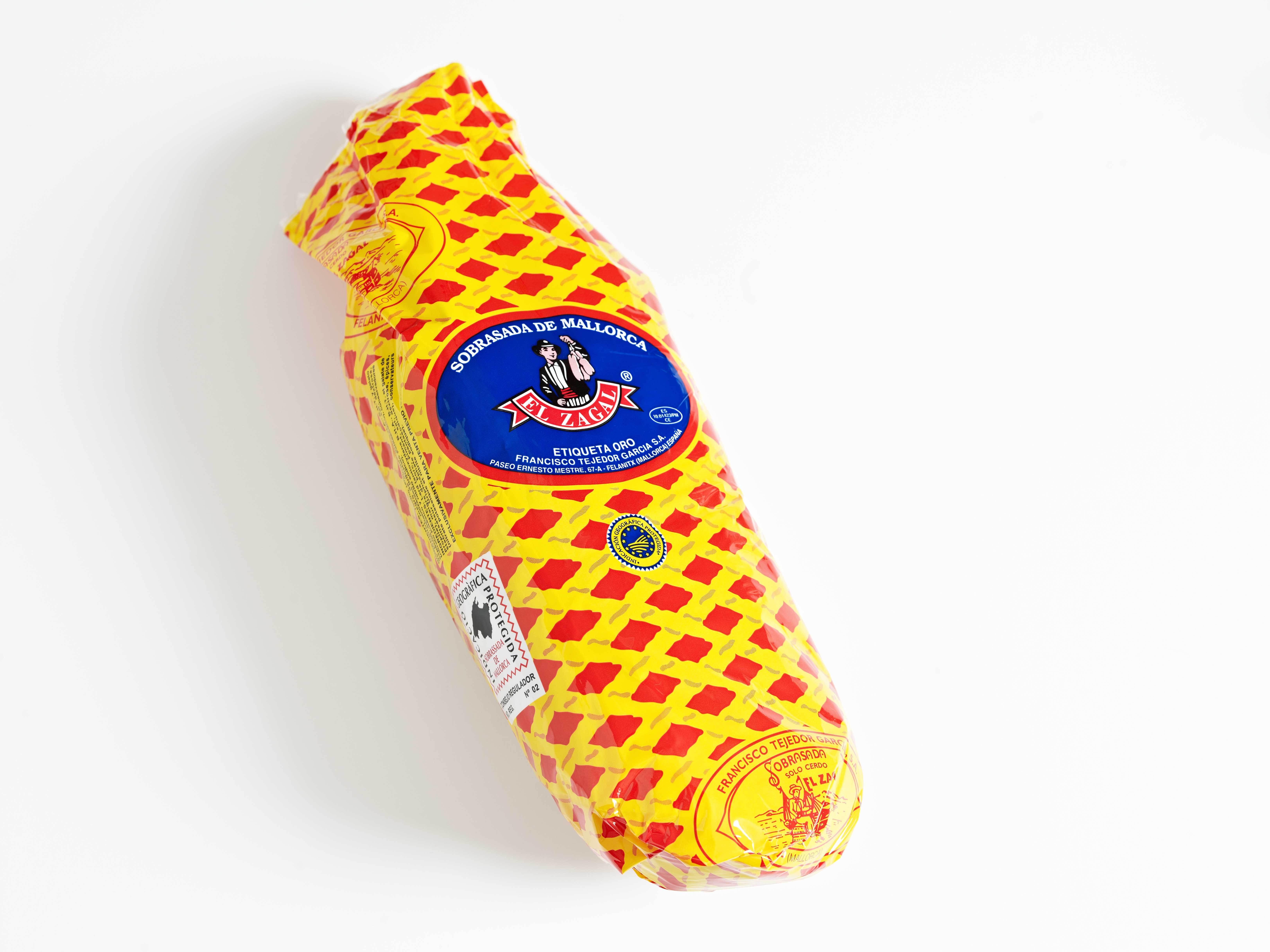
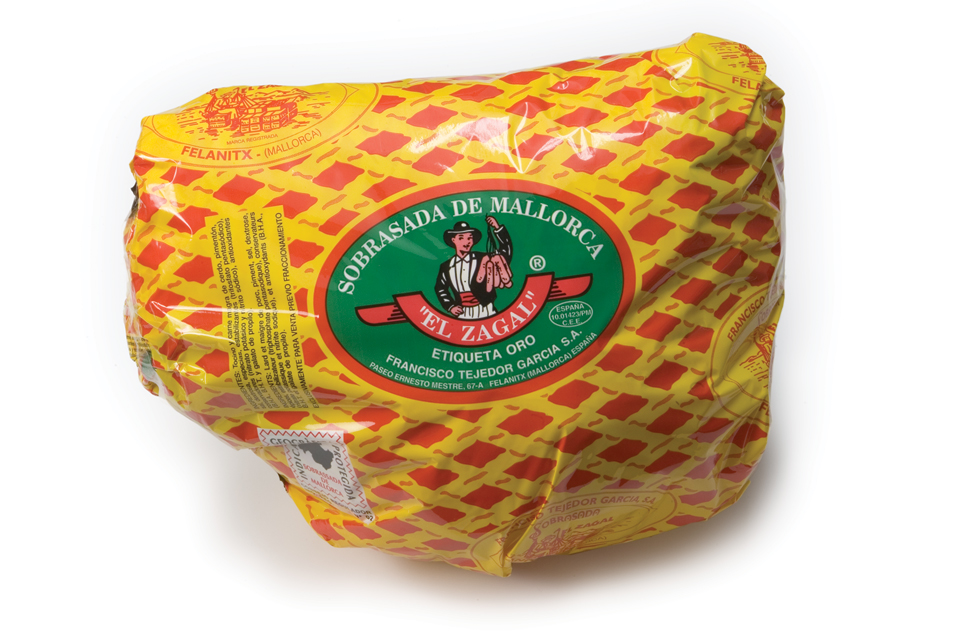
In addition to traditional natural casing formats, sobrasada is now also sold in other more practical formats for modern consumption:
- Tubs: spreadable sobrasada in plastic containers, very practical for daily use.
- Sweet sobrasada: variants with honey or sugar, to pair with cheese.
- Black pig sobrasada: the premium variety, made exclusively with meat from the native Porc Negre Mallorquí breed.